PRICING

How much ecommerce project development costs

Cost depends on catalog structure, sales scenarios, integrations, design and the future scale of the system.

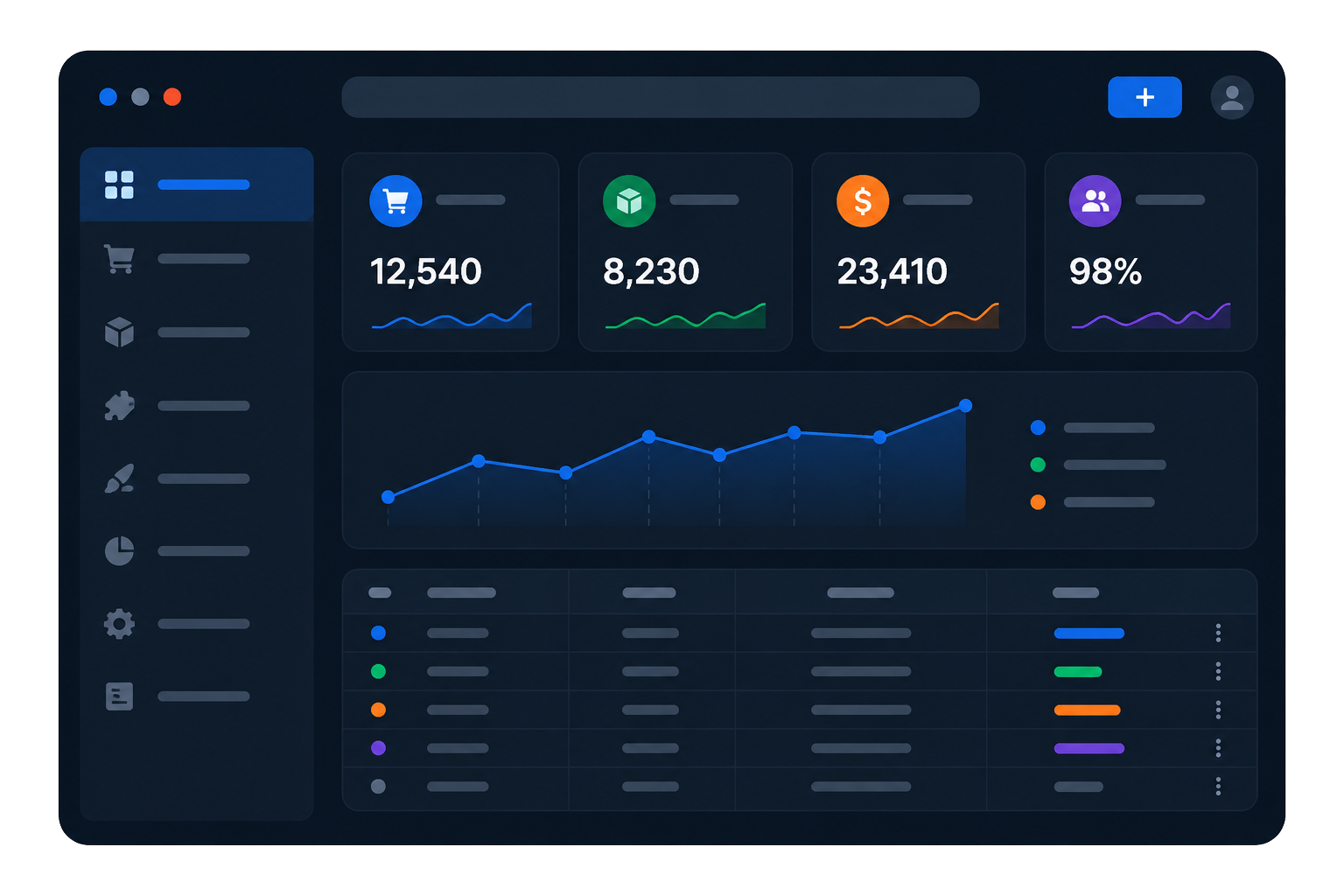
Ecommerce project estimate map for structure, integrations, SEO and launch.

DEVELOPMENT FORMATS

Estimated cost depends on the development format

We choose the format not by technology name, but by project tasks, required flexibility and future growth plans.

CMS · CATALOG · STANDARD LOGIC

01

Development on a ready CMS

from $1500
For whom

For company websites, catalogs and small online stores with standard logic where a complex internal system is not needed.

What we do

We select a CMS, configure the page structure, adapt the design, add a catalog, forms, base SEO structure and required standard modules.

Result

A ready managed website that can be filled and developed independently through the administration panel.

WordPress/WooCommerce, OpenCart, Shopify and other ready platforms. Estimate CMS development →

AIRKOD READY-MADE ARCHITECTURE · CODEX · VIBE CODING

03

Vibe coding on Airkod ready-made architecture

from $500
For whom

For teams and business owners who want to create and develop a website with prompts, without starting the project from an empty folder.

What we do

We install Airkod ready-made architecture, configure the workspace and Codex, and connect the administration panel, development rules and documentation.

Result

A ready foundation for creating UI, content and functionality through prompting independently or with support from the Airkod team.

The code, database, domain and server remain owned by the client. Learn about vibe coding →

BUDGET

What shapes the project budget

Two ecommerce systems can look similar from the outside and still cost differently because of catalog logic, integrations, user roles and order processing.

Structure and pages

The number of page types, templates, interface states and user scenarios.

Catalog and data

Product volume, variations, attributes, filters, imports and update frequency.

Integrations

Payments, delivery, CRM, ERP, marketplaces, analytics and external API services.

Design and UX

A ready template, adaptation of an existing style or a fully individual design system.

Business logic

Roles, statuses, accounts, B2B scenarios, non-standard checkout and automation.

SEO and scaling

Landing pages, metadata, schema, multilingual content, performance and future catalog growth.

BASE LAUNCH

A base launch is already a product ready to go live

Not a separate page or a design mockup, but a working structure with content, forms, SEO foundation, analytics and tested scenarios.

Visual scheme of a base ecommerce launch with structure, content, SEO, analytics and release.
01

Structure and prototype

Brief, page map, content structure and key user scenarios.

02

Design direction

Visual system, responsiveness and the main UI components of the future product.

03

Development and content

Frontend, backend, content management, working forms and base page logic.

04

SEO, analytics and launch

Base SEO structure, analytics connection, testing, bug fixing and release.

ADDITIONAL MODULES

What can expand the base budget

These modules are added when a project needs more complex logic, large data flows or process automation.

01

Integrations and data exchange

CRM, ERP, marketplaces, external API services, two-way sync, statuses and error handling.

02

Large catalog

CSV, XML or API imports, parsers, mass updates, complex filters and a large number of SKU.

03

Accounts and B2B logic

User accounts, roles and access, individual prices, documents and order history.

04

Custom checkout and SEO

Non-standard checkout, complex payment and delivery scenarios, multilingual content, extended SEO structure and many landing pages.

ESTIMATE

How we estimate a project

We collect the facts first, then shape launch options, a budget range and the next practical step.

  1. 01

    Define the business task

    We review the sales model, catalog, users and key scenarios.

  2. 02

    Describe the structure

    We define pages, integrations, data sources and required modules.

  3. 03

    Shape launch options

    We separate the required start, next stages, risks and possible simplifications.

  4. 04

    Give a budget range

    We explain cost, timing, work format and the next practical step.

WORK FORMAT

The work format depends on how defined the task is

A fixed estimate works for a fixed scope. Product growth or changing requirements fit an hourly or staged model better.

Fixed scope

Fixed Price

For a project with an agreed structure and clear work scope. Budget and result are fixed before start, and cost changes only when the task changes.

Maximum clarity before start.

Flexible growth

Time & Materials

For product development, integrations and tasks that are clarified during the process. Payment is based on completed hours with transparent task reporting.

Flexibility for change and growth.

Launch in parts

Staged launch

For large projects that are better launched in stages: ecommerce foundation first, then integrations, automation and additional modules.

Budget control through stages.

Pricing FAQ

Can I get an exact price without a brief?

Without structure and key scenario descriptions, we can name only an estimated range. Exact estimates appear after pages, integrations, data and launch logic are defined.

Can we start with a minimal version?

Yes. We can define the required ecommerce foundation, launch it first, then add integrations, automation and additional modules in stages.

Do you work hourly?

Yes. The hourly model fits product development, support, integrations and tasks whose scope is clarified during the work.

Can the price change after start?

It does not change if the fixed scope stays the same. New tasks are estimated separately before implementation starts.

Can the project be split into stages?

Yes. First, we can launch the catalog, checkout and base integrations, then add complex modules after the core business logic is tested.

What is needed for a preliminary estimate?

A business description, approximate catalog structure, required integrations, website examples and an understanding of the key sales scenario.

Want to understand your project budget?

Describe the business, catalog, integrations and main sales scenario — we will suggest a launch format and budget range.